

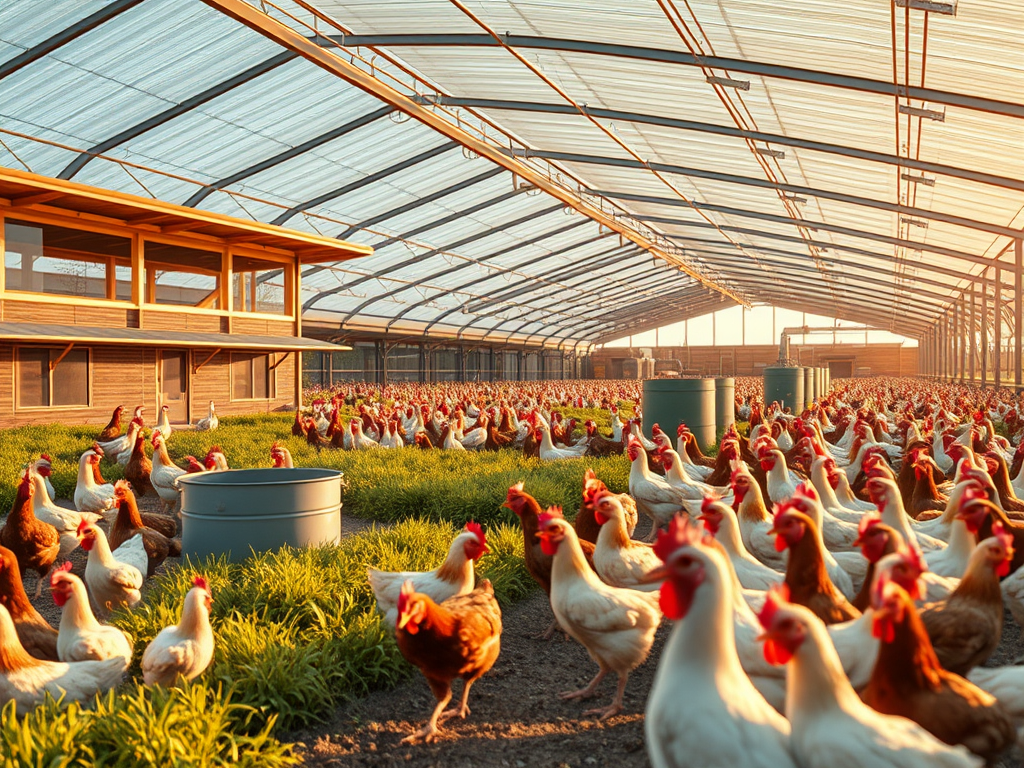
The poultry industry is a significant contributor to global greenhouse gas (GHG) emissions due to energy-intensive operations, feed production, and waste management practices. Addressing these challenges through sustainable practices is essential for reducing the sector’s environmental impact. This report explores strategies for reducing GHG emissions, optimizing energy use, managing poultry waste effectively, understanding the emissions intensity of egg production, and how adsorbent powders can help farmers achieve environmental sustainability.
Reducing Greenhouse Gas Emissions and Optimizing Energy Use
Energy Consumption in Poultry Operations
Heating, ventilation, and air conditioning (HVAC) systems are the primary energy consumers in poultry houses, accounting for up to 50% of non-renewable energy use. These systems are crucial for maintaining optimal conditions for poultry health and productivity.
Renewable Energy Integration
Transitioning to renewable energy sources such as solar, wind, and biogas can significantly reduce GHG emissions. Implementing biogas production systems through anaerobic digestion of poultry litter provides renewable energy and reduces the carbon footprint.
Energy Recovery Systems
Heat recovery ventilators and thermal energy storage enhance energy efficiency in poultry houses. These systems capture and reuse waste heat, reducing additional energy inputs and lowering overall emissions.
Sustainable Poultry Waste Management
Composition and Challenges
Poultry litter comprises manure, spilled feed, and bedding materials like sawdust or rice husks. Improper management can lead to environmental pollution and health hazards.
Composting and Anaerobic Digestion
Composting and anaerobic digestion stabilize poultry litter and reduce GHG emissions. These processes produce valuable by-products such as compost and biogas for fertilizers and renewable energy.
Nutrient Recycling
Recycling poultry litter into biofertilizers and animal feed closes nutrient loops and reduces reliance on synthetic inputs. This contributes to soil health and reduces environmental pollution.
Environmental Impact of Egg Production
Emissions Intensity
Egg production has a carbon footprint of approximately 2–2.5 kg CO₂e per kg of eggs, accounting for feed production, housing, and manure management. While lower than beef or pork, egg production remains a significant source of GHGs.
Feed Production
Feed cultivation involves energy use, fertilizer application, and land use change, all contributing to GHG emissions.
Housing Systems
Free-range systems increase energy requirements and land use, while cage systems are more energy-efficient but raise animal welfare concerns.
Manure Management
Manure from laying hens emits methane (CH₄) and nitrous oxide (N₂O). Composting and anaerobic digestion can mitigate these emissions while producing valuable by-products.
Role of Adsorbent Powders in Reducing Emissions
Introduction to Adsorbent Powders
Diatomaceous earth (DE) and attapulgite clay are naturally occurring minerals with porous, absorbent structures. When applied to poultry litter, they modify the microenvironment, reducing the production and release of GHGs and other harmful emissions.
Mechanisms of Emission Reduction
- Moisture Absorption: DE and attapulgite clay absorb and retain moisture from litter, preventing anaerobic pockets where methane-producing bacteria thrive. Dry litter reduces methane (CH₄) and nitrous oxide (N₂O) emissions and extends litter lifespan.
- Ammonia Binding: Negatively charged surfaces attract ammonium ions (NH₄⁺), trapping ammonia (NH₃) in the litter. This reduces N₂O formation and improves air quality.
- Microbial Activity Modulation: Reduces moisture and binds ammonia, suppressing anaerobic microbial activity responsible for methane and nitrous oxide production.
- Odor and VOC Control: Adsorbs volatile organic compounds (VOCs), improving air quality and indirectly mitigating GHG emissions.
- Litter Stabilization and Composting Efficiency: Improves litter aeration and structure, reducing methane emissions during storage or composting. Treated litter is easier to recycle into biofertilizers.
Cumulative Environmental Benefits
| Function | Mechanism | Emission Impact | Other Benefits |
|---|---|---|---|
| Moisture control | Absorbs water, reduces anaerobic zones | Reduces CH₄ | Longer litter life, less cleaning |
| Ammonia adsorption | Binds NH₄⁺ ions | Reduces N₂O | Better air quality, reduced odor |
| Microbial modulation | Limits anaerobic microbes | Reduces CH₄ & N₂O | Slower decomposition, safer litter |
| VOC/odor control | Adsorbs volatile compounds | Indirect GHG reduction | Reduced odor complaints |
| Litter stabilization | Improves aeration | Fewer CH₄ emissions | Enhanced composting, nutrient recycling |
DE and attapulgite clay provide a natural, cost-effective approach to emission control, complementing renewable energy adoption, optimized waste management, and improved housing systems. Their use reduces GHG emissions per unit of poultry production and improves environmental and economic sustainability.
Conclusion
Implementing sustainable practices—including renewable energy, efficient housing, optimized waste management, and the use of adsorbent powders—significantly reduces GHG emissions. These measures enhance environmental sustainability while improving farm productivity and economic efficiency.
Recommendations
- Adopt renewable energy sources such as solar, wind, and biogas.
- Implement energy recovery systems like heat recovery ventilators and thermal storage.
- Enhance waste management practices, including composting, anaerobic digestion, and litter recycling.
- Use adsorbent powders (DE and attapulgite clay) for moisture, ammonia, and odour control.
- Optimize egg production systems by selecting housing that balances energy efficiency and welfare.
- Promote nutrient recycling by converting treated litter into biofertilizers or animal feed.
- Monitor and optimize operations regularly to track energy use, emissions, and litter quality.
Using DE and attapulgite clay in litter management allows farmers to achieve measurable reductions in GHG emissions, improve bird comfort and productivity, and support sustainable poultry operations.
Find out more: www.chickenkoop.com.au
Available ChickenKoop® Refresh 10L tubs:
ChickenKoop® Refresh 10L tub – RRP $40 each
Pick Up:
Hudson House Car Park
131 Macquarie Street, Sydney 2000
Wholesale stockist:
Pallet of 96 x 10L tub
Enquire: [email protected]
Ph: 02 9251 7177
Bulk buy:
500kg or 1/2 tonne bulka bag
ex Geraldton, Western Australia
Enquire: [email protected]
Ph: 02 9251 7177
All enquiries:
Email: [email protected]
Ph: 02 9251 7177
H/O: Level 5, 52 Phillip St, Sydney NSW
Keep Your Chicken Coop Clean and Fresh with ChickenKoop™ Refresh
- Improve Ventilation – Ensuring proper airflow in your chicken coop with windows, vents, or fans is the best way to keep your coop clean. Using ChickenKoop™ Refresh in your coop maintenance, coop hygiene, and coop odour control routine reduces ammonia build-up and maintains a fresh coop for backyard chickens and hobby farm chickens.
- Deep Litter Method – Layer organic materials like straw, wood shavings, or hemp bedding in your chicken coop and mix in ChickenKoop™ Refresh. This is the best way to keep your chicken coop clean, reduce odours naturally, and create nutrient-rich compost, keeping your clean and fresh coop healthy for happy hens.
- Regular Cleaning – Remove droppings and replace bedding consistently. Incorporating ChickenKoop™ Refresh into coop cleaning, coop maintenance, and coop care tips is the best way to keep your chicken coop clean and maintain a healthy chicken coop hygiene routine for backyard chickens and hobby farm chickens.
- Natural Odour Control – Use baking soda, diatomaceous earth, or herbs like lavender and mint in your chicken coop. Adding ChickenKoop™ Refresh is the best way to keep your chicken coop clean, enhance coop odour control, and maintain a clean and fresh coop for happy hens, while supporting your deep litter method.
- Moisture Management – Keep bedding dry to prevent ammonia and moisture build-up in your chicken coop. Using ChickenKoop™ Refresh is the best way to keep your chicken coop clean, support coop ventilation, enhance coop bedding, and ensure a fresh coop for backyard chickens, hobby farm chickens, and healthy egg production.
Posts
#chickencoopcleaning, #chickencoop, #cooprefresh, #coopodourcontrol, #chickencoophygiene, #bestbeddingforchickens, #deepLittermethod, #compostingchickenmanure, #predatorproofcoop, #pestcontrolcoop, #ratsinchickencoop, #chickencoopventilation, #hobbyfarmchickens, #backyardchickens, #raisingchickensinbackyard, #smallflockkeeping, #chickencoopsupplies, #chickencoopmaintenance, #freshcoop, #stayfreshcoop, #ChickenKoopRefresh, #happychooks, #cleanandfreshcoop, #coopcaretips #PoultryFarming #SustainablePoultry #CarbonFootprint #GHGReduction #RenewableEnergy #EnergyEfficiency #PoultryWasteManagement #EggProduction #DiatomaceousEarth #AttapulgiteClay #AmmoniaControl #MethaneReduction #Composting #Biofertilizer #OdourControl #PoultryLitter #EcoFriendlyFarming #GreenFarming #FarmSustainability
 AUS Diatomaceous Earth & Attapulgite Clay Supplier
Leave a comment