
Why Domestic Diatomaceous Earth (Diatomite / DE) is the Smart Choice for Horticulture, Agriculture, and Low-Spec Industrial Uses
1. Introduction
Diatomaceous earth (diatomite / DE) is a versatile, naturally occurring material used across agriculture, horticulture, livestock, pet care, and industrial applications. Its unique properties — porosity, high silica content, and natural absorbency — make it an essential component for soil conditioning, pest control, moisture retention, and more.
For companies operating in horticulture, pot plant agriculture, livestock feed, and low-spec industrial markets, sourcing diatomaceous earth (diatomite / DE) from local Australian deposits is cost-effective, sustainable, and highly suitable — particularly for applications where organics are acceptable.
2. Domestic Diatomaceous Earth (Diatomite / DE) vs Imported Diatomaceous Earth (Diatomite / DE)
2.1 Domestic (Australian) Diatomaceous Earth (Diatomite / DE)
Sources: Western Australia, Queensland, South Australia
Characteristics:
- Silica content: 80–90%
- Organics & clay: 5–15%
- Moisture content: 5–10%
- Natural particle size distribution, unprocessed
Ideal Applications: - Potting mixes, landscaping soil, horticulture
- Broadacre agriculture: soil amendment, crop protection
- Livestock feed additive, pest dusting
- Low-spec industrial absorbents
2.2 Imported Diatomaceous Earth (Diatomite / DE)
Sources: USA, Europe, select Asian countries
Characteristics:
- Silica content: 90–99%+
- Organics: <1%
- Moisture content: <3%
- Engineered, micronised, calcined/flux-calcined
- Certified for food, beverage, and pharmaceutical applications
Applications: - Filtration of beer, wine, juice, and water
- Pharmaceutical and food-grade additives
- High-spec industrial absorbents
- Engineered horticultural products
Key Insight: For companies operating in horticulture, pot plants, livestock, and low-spec industrial sectors, domestic diatomaceous earth (diatomite / DE) delivers all the performance required — and imported diatomaceous earth (diatomite / DE) is often unnecessary for these markets.
2.3 Comparison Table: Domestic vs Imported Diatomaceous Earth (Diatomite / DE)
Feature | Domestic Diatomaceous Earth (Diatomite / DE) | Imported Diatomaceous Earth (Diatomite / DE) | Relevance for Your Business
Silica content | 80–90% | 90–99%+ | Perfect for horticulture and soil amendment; filtration not required
Organic content | 5–15% | <1% | Organics are fine — can enhance soil health
Moisture content | 5–10% | <3% | Suitable for general agriculture and horticulture
Particle size | Broad, natural | Controlled, fine | Domestic DE works well for soil, potting mixes, and livestock dusting
Calcination | None / low-temperature | High-temperature / flux-calcined | Not required for low-spec horticulture, agriculture, or pet applications
Regulatory compliance | Domestic / non-food | FCC / USP / ISO | Domestic DE meets needs where certification is not mandatory
Recommended applications | Horticulture, agriculture, livestock, low-spec absorbents | Filtration, pharmaceutical, food-grade, high-spec industrial | Focus on domestic DE for cost-effective, sustainable solutions
3. Why Australian Companies Should Use Domestic Diatomaceous Earth (Diatomite / DE)
Cost Savings: Avoid import and shipping costs. Secure bulk, locally-sourced material.
Suitable for Target Applications: Horticulture & Potting Mixes: Organics enhance soil structure, retain moisture, and support plant growth. Broadacre Agriculture: Soil amendment, pest control, and crop conditioning work perfectly with domestic diatomaceous earth (diatomite / DE). Livestock & Pet Care: Non-toxic, natural diatomaceous earth (diatomite / DE) is ideal for feed additives, bedding, and dusting.
Sustainability & Local Supply: Reduce carbon footprint by sourcing locally. Support Australian DE mining and processing industries.
Ease of Compliance: Domestic DE does not require expensive international certifications for low-spec applications. Allows companies to focus on performance, not regulatory overhead.
4. Target Applications and Benefits for Your Industry
Industry / Use | Benefits of Domestic Diatomaceous Earth (Diatomite / DE)
Horticulture / Pot Plants | Improves soil structure, water retention, pest control; cost-effective
Broadacre Agriculture | Enhances soil, supports crop health, controls insects naturally
Livestock Feed | Safe, natural anti-caking agent; supports animal health
Pet Litter & Bedding | Absorbent, non-toxic, cost-effective alternative to imported DE
Low-Spec Industrial Absorbents | Effective for spill cleanup, moisture control, dust management
5. Market Opportunity
By choosing domestic diatomaceous earth (diatomite / DE) for these low-spec applications, companies can reduce operational costs by using locally sourced materials, access a consistent, reliable supply for horticulture, agriculture, and livestock operations, enhance sustainability by reducing dependence on imported DE, and maintain product performance while leveraging organics for soil and plant health.
Imported diatomaceous earth (diatomite / DE) should be reserved for high-spec filtration, food-grade, pharmaceutical, and engineered industrial applications, where purity, particle size, and regulatory compliance are critical.
6. Recommended Suppliers and Partners
Supplier | Application Focus | Notes
Hudson Marketing / Hudson DE | Horticulture, agriculture, livestock, pet care | Domestic WA DE, broad low-spec applications
Greenpet | Gardens, horticulture, livestock | Organic DE, cost-effective for agriculture
Orku / HomeMyGarden | Livestock, garden, horticulture | Natural, unprocessed DE
Mintabie / Dia-Min | Pest control, livestock, horticulture | Domestic sourcing, suitable for bulk applications
Trisil Group | Broadacre agriculture, horticulture | Imports only where domestic supply is insufficient
Plant Doctor | Food-grade / premium DE | Imported, high-spec only
7. Conclusion
For companies in horticulture, agriculture, pot plant production, livestock, and low-spec industrial applications, Australian domestic diatomaceous earth (diatomite / DE) is the optimal choice. It is cost-effective, locally available, and perfectly suited for applications where organics and natural particle variation are not only acceptable but advantageous.
Imported diatomaceous earth (diatomite / DE) should only be used where high purity, engineered particle size, or regulatory compliance is required — for example, in beverage filtration, pharmaceuticals, or specialised industrial processes.
By prioritising domestic diatomaceous earth (diatomite / DE) in low-spec applications, Australian companies can reduce costs, support local industries, and maintain high-quality outcomes for plants, animals, and soil health.
Why Australian Diatomaceous Earth (Diatomite / DE) Matters
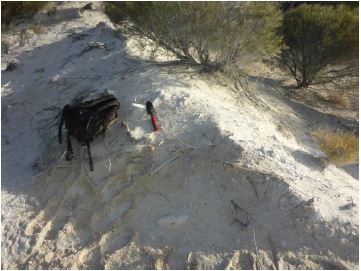
Using local diatomaceous earth (diatomite / DE) means your products are traceable from source to application. Every batch comes from the Badgingarra stockpile, providing a naturally occurring composition of amorphous silica with organics, ready for tailored applications. Supplying raw ore also creates opportunities for innovation and product development, supported by government initiatives encouraging natural solutions and technologies.
Getting Your Sample
If you’re interested in exploring the benefits of freshwater diatomaceous earth (diatomite / DE), we offer screened <10 mm samples for testing and trial applications. Suppliers, manufacturers, and innovators can see firsthand how Australian diatomaceous earth (diatomite / DE) can be customized for their specific requirements.
Contact AusDE
For sample requests or supply inquiries, contact AusDE at [email protected] or call +61 2 9251 7177.
Experience the journey of diatomaceous earth (diatomite / DE) from the lakebed at Badgingarra to your end product — naturally Australian, naturally occurring, and fully adaptable to your innovation.
 AUS Diatomaceous Earth & Attapulgite Clay Supplier
Leave a comment