
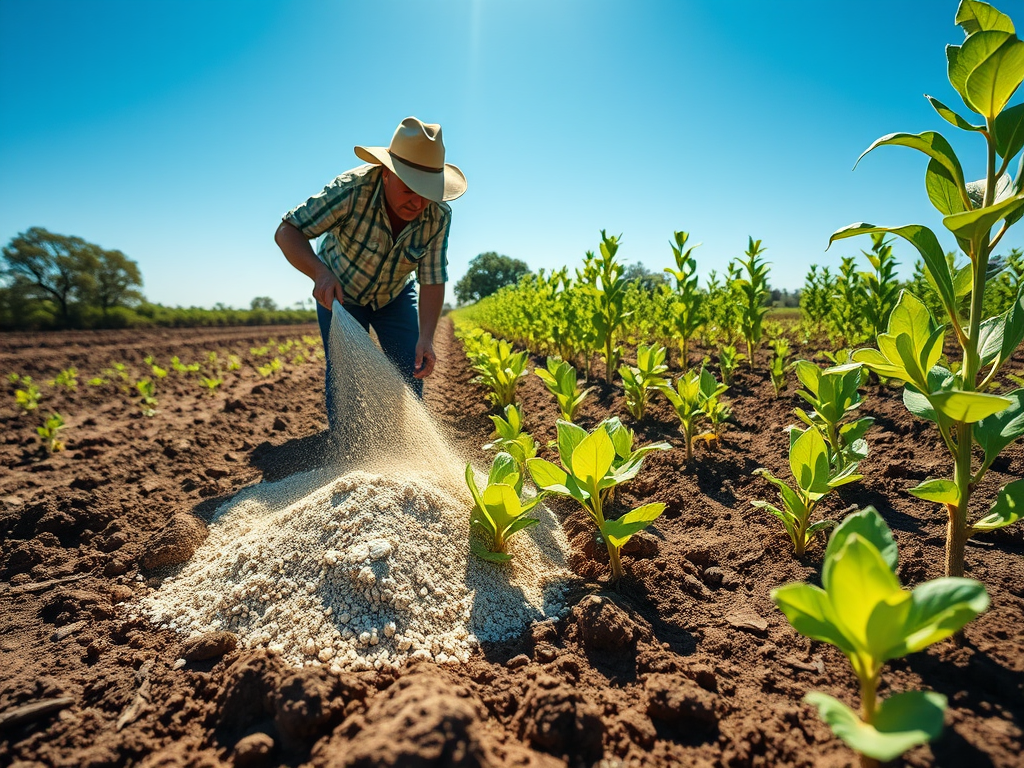
Efficient fertiliser application is essential for Australian growers, landscapers, and horticulturists. With hot, dry conditions and nutrient-poor soils, many crops and turf areas face challenges such as nutrient leaching, reduced uptake, and soil degradation.
Diatomaceous earth (diatomite / DE) and attapulgite clay offer natural, mineral-based solutions to improve fertiliser efficiency, maintain soil fertility, and enhance crop and turf resilience.
How Diatomaceous Earth (Diatomite / DE) Enhances Fertiliser
- Silica-rich structure supports plant cell wall development and strengthens stems and roots
- Moisture retention keeps fertiliser nutrients available for longer periods
- Slow nutrient release adsorbs nutrients such as ammonium, potassium, and calcium, releasing them gradually and reducing losses from leaching, particularly in sandy soils
- Application: Mix diatomaceous earth (diatomite / DE) with granular fertilisers or incorporate into soil prior to fertiliser application. Typical broadacre rates range from 100–500 kg per hectare depending on soil type
How Attapulgite Clay Improves Fertiliser Efficiency
- High cation exchange capacity (CEC) retains positively charged nutrients (e.g., K⁺, NH₄⁺, Ca²⁺), preventing leaching and enhancing nutrient uptake
- Improves soil aggregation and aeration, distributing nutrients evenly through the soil profile
- Synergy with water retention ensures fertiliser nutrients remain accessible to roots longer
- Application: Typically applied at 5–15% by volume in soil mixes, either pre-blended with fertilisers or incorporated separately
Blending Diatomaceous Earth (Diatomite / DE) and Attapulgite Clay for Fertiliser
- Combined benefits enhance moisture retention, nutrient holding, and soil structure simultaneously
- Recommended ratio: 4 parts attapulgite clay to 1 part diatomaceous earth (diatomite / DE)
- Application tips: Spread evenly over soil and incorporate into the top 10–20 cm. Combine with organic fertilisers for long-term nutrient availability. Suitable for broadacre crops, horticultural plots, turf, and garden beds
Benefits of Using Diatomaceous Earth (Diatomite / DE) and Attapulgite Clay with Fertiliser
- Reduced nutrient loss minimises leaching in sandy or highly permeable soils
- Slow-release nutrients maintain a steady supply of fertiliser over time
- Improved plant health with silica in DE strengthening plants against heat, drought, and disease
- Enhanced soil structure from attapulgite clay improving aggregation and aeration for better root growth
- Sustainable practice reduces fertiliser wastage and environmental runoff
Practical Considerations for Australian Conditions
- Sandy soils benefit most from attapulgite for nutrient retention and diatomaceous earth for moisture retention
- High-temperature conditions are mitigated as both minerals maintain nutrient availability and reduce volatilisation
- Application timing: Apply minerals before or alongside fertiliser to maximise efficiency and avoid losses
- Blended vs separate use: Use separately if targeting specific soil issues (e.g., moisture retention vs nutrient binding). Use blended for multi-purpose fertiliser efficiency and soil conditioning
Accessing Processed Australian Diatomaceous Earth (Diatomite / DE) and Attapulgite Clay
Growers seeking processed minerals for fertiliser enhancement can access:
- 10 L tubs for small gardens or horticultural plots
- Bulk mineral supply for broadacre crops, turf, or orchards
- Blended mineral formulations for combined moisture retention and nutrient efficiency
For more information or supplier connections, contact:
Email: [email protected]
PH: 02 9251 7177
Conclusion
Incorporating diatomaceous earth (diatomite / DE) and attapulgite clay with fertiliser applications offers Australian growers a natural, sustainable solution to enhance nutrient efficiency, reduce leaching, and improve crop and turf resilience. Whether used separately or blended, these minerals support better soil health, water management, and plant growth, making them a valuable tool in modern agriculture, horticulture, and landscape management.
-
Optimising Fertiliser Application with Diatomaceous Earth (Diatomite / DE) and Attapulgite Clay in Australia
 AUS Diatomaceous Earth & Attapulgite Clay Supplier
Leave a comment