
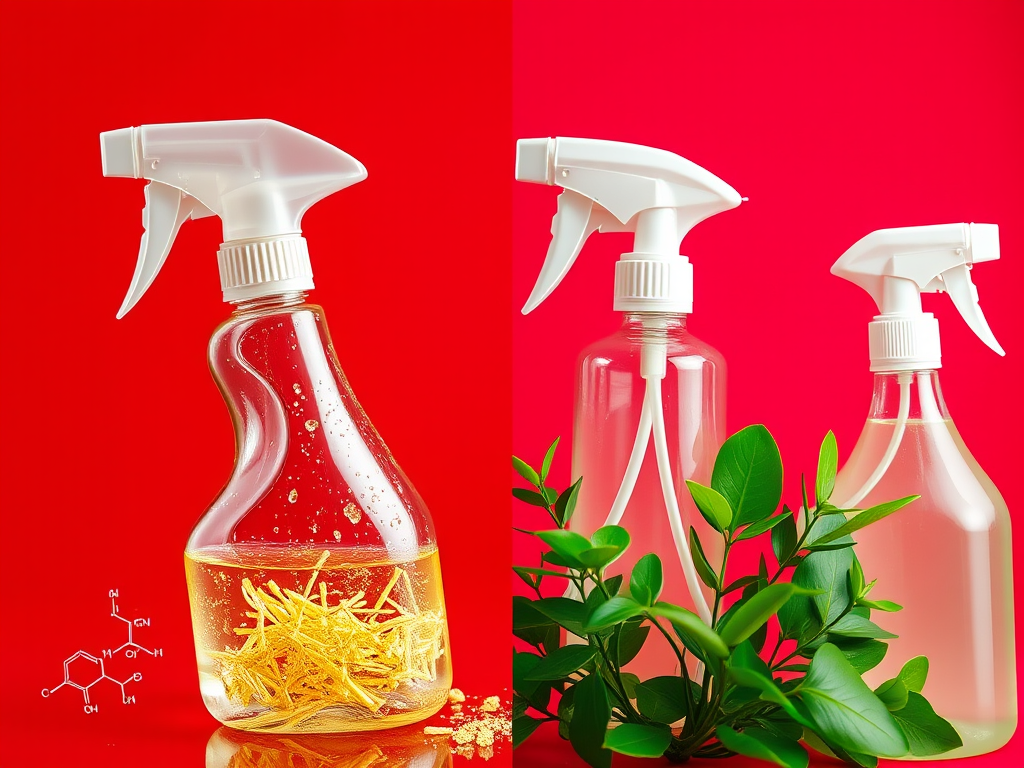
❗ A. Packaging — Plastic Spray Bottles
- Life-cycle impact: Plastic trigger sprayers and bottles have significant environmental burdens linked to raw material extraction, production energy, and end-of-life waste. These impacts include greenhouse gas emissions and resource depletion.
- Low recycling rates: In Australia, only about 13 % of plastic is recycled while the majority goes to landfill — contributing to long-term pollution and microplastic release into ecosystems.
- Microplastics: Plastic waste from bottles and packaging contributes to microplastic pollution — a recognized environmental threat in Australian water bodies and soils.
❗ B. Chemical Pollution From Spray Use
- VOCs & air quality: Many conventional and even some “eco” sprays emit volatile organic compounds (VOCs) when sprayed. VOCs contribute to smog formation and can harm air quality, respiratory health, and climate — both indoors and outdoors.
- Spray drift & aerosol spread (Australia): Even outside industrial or agricultural contexts, the act of spraying can create fine droplets that carry chemicals beyond the target area, potentially affecting water supplies, soil, plants, and human health.
- Water pollution: After use, many cleaning chemicals enter wastewater and natural waterways, where they can be toxic to aquatic organisms and disrupt ecosystems.
❗ C. Health & Ecosystem Concerns
- Some sprays contain surfactants, synthetic fragrances, bleach, ammonia, and other additives — which can persist in water systems and affect wildlife, microbes, and ecological balance.
🧪 2. Bioenzyme or “Enzyme” Spray Cleaners — Transparency & Composition Issues
❓ A. Inconsistent Ingredient Transparency
- Many enzyme-based cleaners on the market (including some in Australia) do not disclose full chemical compositions publicly because formulations are protected by trademarks and proprietary blends. This makes independent environmental assessment difficult.
- “Bioenzyme” claims are often used broadly without consistent standards — meaning products can range from primarily plant-derived enzymes to mixtures with undisclosed surfactants and other additives.
🧬 B. What “Enzyme” Formulations Typically Claim
- Enzyme sprays marketed in Australia often describe plant-based enzymes and biodegradable surfactants that break down organic dirt and odour.
- Some products (e.g., those claiming “live bacteria producing enzymes”) suggest ongoing enzymatic activity, though scientific verification and standardisation of enzyme content is often lacking.
⚠️ C. Lack of Independent Standards
- Unlike other product types that may be certified by bodies such as GECA (Good Environmental Choice Australia) or Global GreenTag — which evaluate environmental lifecycle impacts — many enzyme sprays do not carry independent certification. That increases the risk of greenwashing (marketing claims that sound eco-friendly but aren’t rigorous).
📊 3. Scientific Research on Spray Cleaners & Enzyme Cleaners
📌 A. Life Cycle Studies
- Research on conventional and bio-detergent formulations shows that enzymatic and biodegradable products can have reduced environmental impacts on water quality and aquatic ecosystems compared to traditional surfactants and harsh chemicals.
- A 2021 study using ecodesign and life cycle assessment (LCA) on industrial enzyme cleaners highlights that manufacturing, formulation, packaging, and disposal all influence environmental performance — and strategies like refillable packaging and biodegradable inputs can improve outcomes.
🆚 4. Traditional Spray Cleaners vs. Absorbent Powder Products (e.g., Eco Pawz CleanUp)
| Feature | Spray Cleaners (Conventional / Bioenzyme) | Absorbent Powder (e.g., Eco Pawz CleanUp) |
|---|---|---|
| Packaging volume | Usually single-use bottles (plastic) → high waste | Paper bags / reusable bulk containers → lower ongoing waste |
| Transparency of composition | Often proprietary, variable enzyme content, incomplete disclosure | Powder chemistry can be disclosed and simple |
| Chemical emissions | Potential VOCs & spray drift concerns | No spray aerosols → minimal airborne exposure |
| Waterway risk | Liquid runoff can carry surfactants/chemicals | Solids easier to collect and dispose of without spreading |
| Recycling/Reuse | Limited spray bottle recycling; often single-use | Paper biodegradable; reusable bulk tub reduces plastic waste |
| Lifecycle impact research | Mixed; depends heavily on formulation and packaging | Generally lower plastic dependence and lower delivery impact |
📌 Key Takeaways for Australia & Globally
✔ Spray bottles — especially plastic single-use — are an environmental problem
- Their production, low recycling rates, and persistent waste contribute to plastic pollution and microplastics, which are documented concerns in Australia.
✔ Chemical sprays can contribute to VOC pollution and ecosystem stress
- Aerosolised cleaners — even “eco-labeled” — may still emit VOCs and have ingredients that affect air quality and water systems.
✔ Bioenzyme sprays vary widely in composition and transparency
- Because of lack of standardised disclosures and certification, it’s difficult to compare environmental profiles reliably across enzyme spray products — even within Australia.
✔ Absorbent powders avoid many of these issues
- Powder products avoid spray packaging and aerosols, reduce waterborne chemical dispersion, and (when paper-packaged or reusable) significantly reduce plastic waste.
🧠 Conclusion
- Spray formats — whether traditional or enzyme-based — have multiple environmental impacts related to packaging waste, chemical emissions, and inconsistent formulation transparency.
- Scientific evidence and lifecycle assessments support the idea that the delivery method, packaging, and ingredient transparency matter as much as the product itself.
- Products like 100 % Australian adsorbent powders offer clearer lifecycle advantages (lower plastic use, less aerosolized chemical spread, simpler composition) — provided the powder formulation itself is benign and disclosed.
Environmental and Practical Issues with Spray Cleaners
- Spray Format & Packaging
- Single-use plastic bottles contribute to plastic pollution and microplastics.
- Significant product wastage through overspray and evaporation (20–50%).
- Aerosolised chemicals can affect indoor air quality and spread into waterways.
- Enzyme & Bioenzyme Sprays
- “Bioenzyme” is not a regulated or standardised term.
- Formulations are often trademarked, lacking transparency about actual chemicals.
- Composition can vary widely, sometimes including synthetic surfactants or fragrances.
- Difficult for consumers or researchers to compare environmental impacts reliably.
- Environmental Consequences
- VOCs and other chemicals from sprays contribute to air pollution and ecosystem stress.
- Liquid runoff can enter soil and waterways, impacting wildlife and water quality.
- Packaging, chemicals, and marketing all externalise environmental costs.
- Advantages of Mineral-Based Powders (e.g., Eco Pawz CleanUp)
- No aerosolisation → reduced air exposure and chemical drift.
- Simple, transparent composition → naturally occurring, Australian-sourced minerals.
- Lower packaging impact → paper bags and reusable bulk tubs reduce plastic waste.
- Efficient lifecycle → powders are applied, absorbed, and collected with minimal residual impact.
- Key Takeaway
- True sustainability is about reducing system load, not just marketing claims.
- Products designed for simplicity, transparency, and reuse deliver genuinely lower environmental impact than spray alternatives.
dog poop odor, dog urine odor, puppy accidents cleaning, dog waste cleanup, pet mess odor removal, smelly dog poop, pet urine odor solution, dog area cleaning, backyard dog odor, puppy training cleanup, eco-friendly pet cleaning, natural dog odor remover, biodegradable dog cleanup, environmentally friendly dog products, non-toxic pet cleaner, chemical-free dog cleaning, green cleaning for pets, sustainable dog care products, earth-friendly odor control, natural adsorbent for dogs, dog odor powder, absorbent dog powder, natural odour powder, dog odour spray alternative, enzyme cleaner for dogs, pet stain powder, dog urine powder, pet odor control powder, puppy accidents powder, non-spray dog cleaning, reusable dog cleaning tub, paper bag dog powder, low-waste pet product, zero waste dog care, eco dog product packaging, bulk dog odor solution, Australian-made dog cleaner, sustainable dog supplies, stop dog smell naturally, safe dog odor removal, pet odor elimination, easy dog cleanup, long-lasting dog odor control, indoor dog smell solution, backyard odor control for dogs, best dog cleanup product, Australian dog odor control, eco dog products Australia, dog poop cleanup Australia, natural pet odor solution Australia, sustainable pet care Australia
 AUS Diatomaceous Earth & Attapulgite Clay Supplier
Leave a comment