
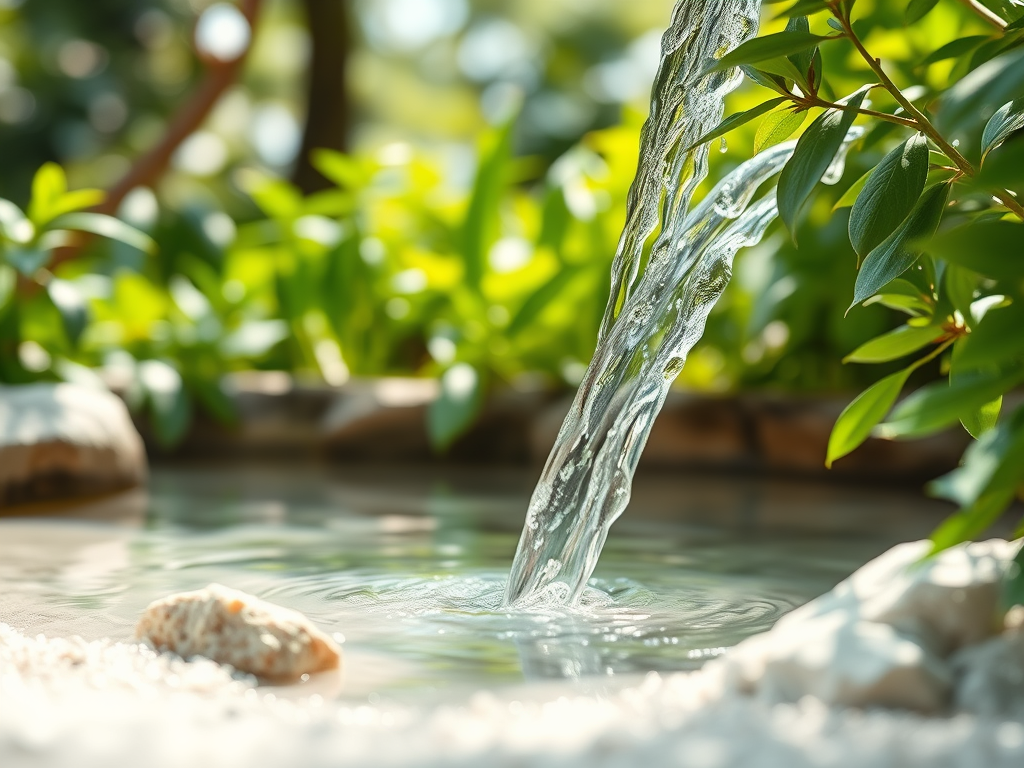
Clean water is essential for homes, farms, and industry, but traditional filtration methods often rely on chemicals or energy-intensive systems. Australian-sourced diatomaceous earth (DE) and attapulgite clay offer natural, sustainable, and highly effective alternatives for water filtration, including greywater reuse, industrial treatment, and potable water applications.
Why Natural Minerals Are Ideal for Filtration
Diatomaceous earth and attapulgite clay are naturally occurring minerals with unique properties that make them excellent filtration media:
- Diatomaceous earth (DE): Composed of fossilised microscopic diatoms, forming a highly porous structure that can trap fine particles, bacteria, and suspended solids.
- Attapulgite clay: A fibrous magnesium-aluminium silicate that functions as an adsorbent and coagulant, binding oils, heavy metals, and other pollutants.
- Both minerals are non-toxic, chemical-free, and biodegradable, making them safe for humans, animals, and the environment.
“Natural minerals like diatomaceous earth and attapulgite clay offer a sustainable way to filter water, removing particles and pollutants without the use of harsh chemicals.”
Applications of DE and Attapulgite Clay in Water Filtration
1️⃣ Greywater Treatment
- DE mechanically filters suspended solids and fine particles.
- Attapulgite clay helps clarify water by adsorbing contaminants and improving turbidity.
- Supports eco-friendly reuse of household and agricultural greywater for irrigation or cleaning.
2️⃣ Industrial and Potable Water Filtration
- DE removes microorganisms, cysts, and fine sediments in industrial and drinking water systems.
- Attapulgite clay enhances removal of oils, metals, and chemical impurities when combined with other filtration media.
- Suitable for large-scale industrial processes, aquaculture, and municipal water treatment.
3️⃣ Pool and Recreational Water
- DE filters trap particles down to 1–3 microns, providing crystal-clear pool water.
- Can be used in combination with sand or activated carbon filters for added purification.
Advantages of Natural Mineral Filtration
- Extremely fine filtration: DE can capture particles as small as 1–5 microns.
- Chemical-free and safe: Reduces reliance on chlorine or synthetic agents.
- Multi-functional: DE and attapulgite clay can be used alone or combined with other filtration systems for enhanced performance.
- Eco-friendly: Minerals are biodegradable and non-toxic, returning safely to the environment after use.
Limitations to Consider
- DE requires pressure or vacuum filtration systems; not ideal for simple gravity filters.
- Both minerals produce dust; inhalation should be avoided.
- Attapulgite clay is not a fine mechanical filter; best used as a coagulant or adsorbent alongside other media.
Using Greywater Safely
Greywater systems benefit from natural mineral filtration by reducing organic matter and turbidity, making water safer for:
- Garden irrigation
- Animal water supplies
- Non-potable household uses
Scientific studies confirm that clay minerals can adsorb pollutants, heavy metals, and some organic compounds, improving water quality for reuse. (PMC)
Bottom Line
Australian-sourced diatomaceous earth and attapulgite clay are eco-friendly, versatile, and highly effective natural solutions for water filtration. Whether you’re treating greywater, filtering drinking water, or maintaining pools, these minerals offer a chemical-free, sustainable approach that aligns with modern green practices and environmental stewardship.
Going natural with mineral-based filtration means cleaner water and a healthier planet.
Summary key takeaways:
Australian-sourced diatomaceous earth (DE) and attapulgite clay are natural, eco-friendly minerals ideal for water filtration.
DE works as a mechanical filter, trapping fine particles, bacteria, and suspended solids.
Attapulgite clay acts as an adsorbent and coagulant, removing oils, turbidity, and chemical contaminants.
Both minerals are chemical-free, biodegradable, and safe for humans, animals, and the environment.
Applications include:
- Greywater treatment for irrigation and non-potable household use
- Industrial and potable water filtration
- Pool and recreational water purification
DE provides extremely fine filtration (1–5 microns), while attapulgite clay is best used alongside other filtration media.
Advantages: sustainable, versatile, eco-friendly, and effective across multiple water filtration scenarios.
Limitations: DE requires pressure or vacuum systems; both minerals produce dust and attapulgite is not a fine mechanical filter.
Using these minerals supports green practices, water reuse, and environmental stewardship, making them suitable for modern sustainable water systems.
 AUS Diatomaceous Earth & Attapulgite Clay Supplier
Leave a comment