
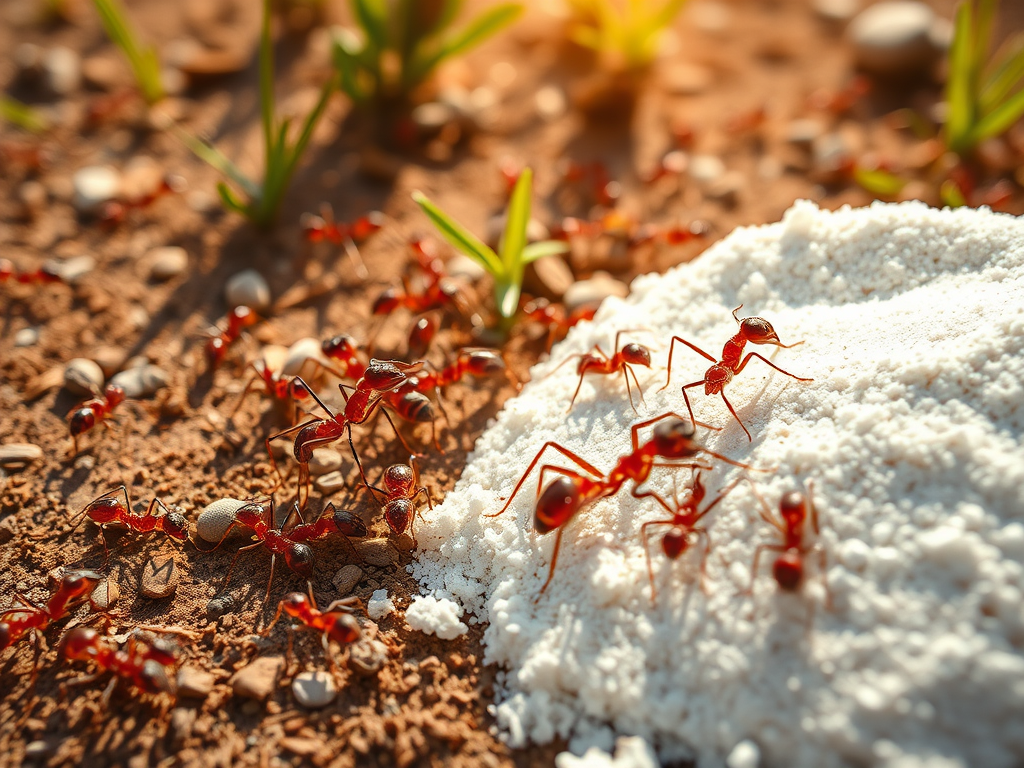
The red imported fire ant (Solenopsis invicta) continues to pose a serious threat to Australia’s agriculture, environment, and public health. First detected at the Port of Brisbane in February 2001, these invasive ants are highly aggressive, form large supercolonies, and have the potential to infest up to 97% of the country if left uncontrolled. Economic modelling estimates that fire ants could cost over $2 billion annually, through crop damage, livestock injuries, machinery harm, medical costs, and disruption to outdoor lifestyles.
Despite the National Fire Ant Eradication Program (NFAEP) operating across more than 850,000 hectares with a budget of nearly $593 million, new nests continue to appear far outside the containment zones, including hundreds of kilometres from original infestations. This highlights the challenge of sustainable eradication using current chemical strategies alone.
Chemical Pesticides: Efficacy and Environmental Concerns
The NFAEP relies on chemical baits containing pyriproxyfen and s-methoprene, which act as insect growth regulators (IGRs), and fipronil, a broad-spectrum nerve agent used in high-risk public areas. While these chemicals can suppress colonies, they pose serious environmental and ecological risks:
- Persistence and runoff: Chemicals can contaminate soils, waterways, and sediments, affecting non-target species.
- Toxicity to pollinators and wildlife: Fipronil is highly toxic to bees and other beneficial insects, while repeated IGR applications can harm aquatic invertebrates.
- Global regulatory restrictions: Fipronil is banned in 49 countries, including the EU, UK, China, Vietnam, and California. Indoxacarb and hydramethylnon are banned in 29 countries.
- Over-application concerns: Frequent baiting over hundreds of thousands of hectares, sometimes near waterways or during heavy rainfall, increases chemical leaching, soil contamination, and ecosystem disruption.
Despite decades of chemical treatments, fire ant populations continue to grow, indicating the limitations of chemical-only approaches and the urgent need for alternative, low-impact solutions.
Diatomaceous Earth (DE): A Natural Pest Control Option
Diatomaceous earth (DE) is a naturally occurring mineral composed of microscopic silica shells. It has been widely used in agriculture, horticulture, and stored-product pest control due to its non-toxic, physical mode of action:
- DE abrades the waxy outer cuticle of insects, causing dehydration and mortality.
- It is environmentally safe, leaving no chemical residues, and poses minimal risk to humans, pets, and beneficial insects.
- Widely adopted internationally, DE is used in grain storage, garden protection, livestock pest management, and household insect control, demonstrating broad applicability and proven efficacy as a natural insecticide.
Hudson G2 Attapulgite Clay: Complementing DE for Holistic Pest Management
While DE targets insects directly, blending it with natural minerals like Hudson G2 attapulgite clay can create a complementary, holistic approach:
- Hudson G2 is a reddish, iron-rich attapulgite clay mined in Western Australia.
- Its high surface area and fibrous structure allow adsorption of moisture, organic matter, and microbial byproducts, potentially reducing nest viability and altering microhabitat conditions favorable to fire ants.
- The iron content supports beneficial soil microbes, enhancing ecosystem resilience and indirectly limiting fire ant colony success.
- Unlike chemical pesticides, G2 acts physically rather than chemically, minimizing risks to waterways, non-target insects, and soil health.
By combining DE and Hudson G2, pest control can leverage multiple mechanisms:
- DE causes direct dehydration and mortality of ants.
- G2 modifies soil microhabitats, stabilizes microbial communities, and supports long-term ecosystem health.
This dual-mineral strategy could reduce reliance on chemical pesticides, mitigate environmental impact, and support sustainable, integrated fire ant management.
Scientific Rationale
- Both DE and Hudson G2 work through physical and adsorption mechanisms, lowering the risk of resistance development compared to conventional chemical pesticides.
- Hudson G2’s trace iron content provides soil microbial stabilization, creating less favorable conditions for fire ant establishment.
- Combining these minerals represents a scientifically defensible, environmentally responsible alternative, supporting Australia’s goal of reducing chemical pesticide use while controlling invasive species.
Hudson Resources Commitment
Hudson Resources is actively supporting research, trials, and development of natural mineral solutions for sustainable fire ant management. Working closely with scientists, industry partners, and regulatory agencies, Hudson is committed to validating the effectiveness and safety of its products, promoting sustainability, environmental stewardship, and reduced chemical reliance.
Conclusion
Australia’s fight against Solenopsis invicta requires innovative, low-impact solutions that protect the environment while effectively controlling pest populations. Diatomaceous earth (DE) and Hudson G2 attapulgite clay offer a complementary, natural, and sustainable approach, combining direct insect control with soil and microbial ecosystem support. This strategy provides a holistic alternative to chemical pesticides, ensuring long-term ecological safety and effective fire ant management.
Get Involved: Trial Our Natural Mineral Solutions
AUSDE invites fire ant management operators, pest control companies, researchers, and government agencies to explore the benefits of our Western Australian diatomaceous earth (DE) and Hudson G2 attapulgite clay.
Samples are available for trial testing in small quantities or bulk orders, allowing stakeholders to assess effectiveness, environmental safety, and suitability for local conditions.
For enquiries or to request a trial, please contact us at [email protected].
 AUS Diatomaceous Earth & Attapulgite Clay Supplier
Leave a comment