
Background: Disease Outbreak in Tasmania
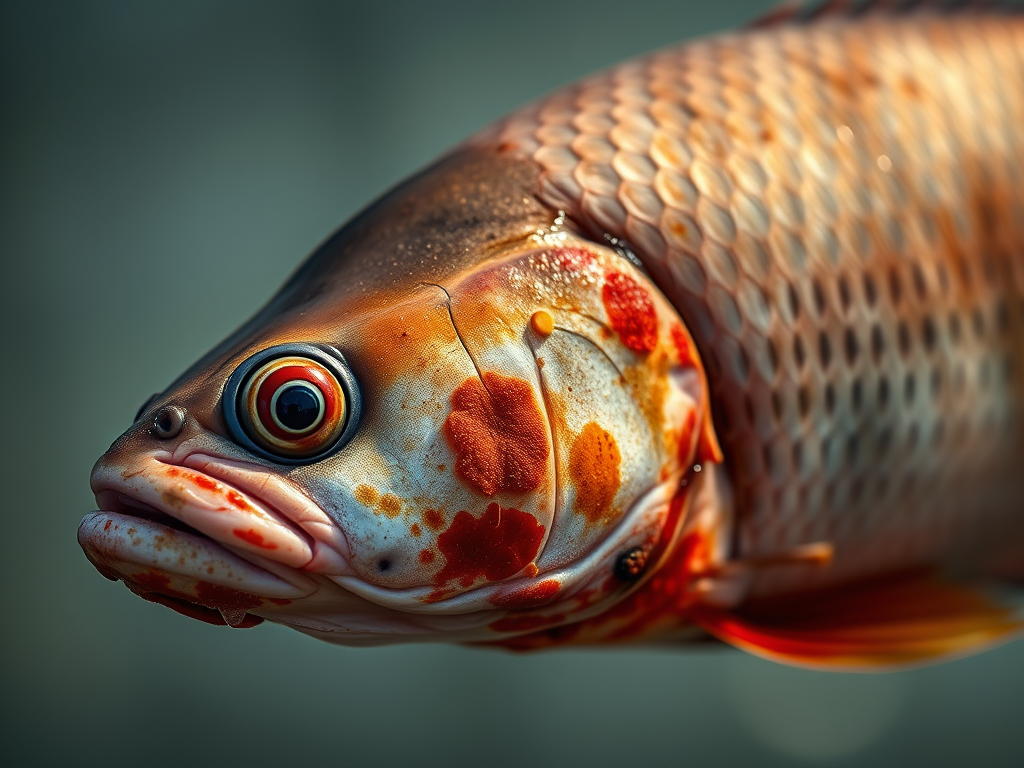
Tasmania produces roughly 90% of Australia’s farmed Atlantic salmon, making it the nation’s dominant aquaculture region. In 2025, farms in the south-east — particularly around the D’Entrecasteaux Channel — were hit by outbreaks of Piscirickettsia salmonis (P. salmonis), an intracellular bacterium affecting salmonids globally.
More than four million farmed salmon reportedly died during 2025. Warmer ocean temperatures, reduced dissolved oxygen, and high stocking densities were cited as contributing stress factors increasing fish susceptibility. Industry representatives argued that without antibiotic intervention, mortality levels would become commercially catastrophic.
The Florfenicol Emergency Permit
In November 2025, the Australian Pesticides and Veterinary Medicines Authority (APVMA) granted an emergency permit allowing large-scale use of florfenicol, a broad-spectrum veterinary antibiotic.
Key elements:
- Permit duration: November 2025 – August 2026
- Permitted volume: 5,600 kg – 11,200 kg
- ~700 kg released within the first two weeks
- That fortnight alone exceeded 10% of all antibiotics used by the Tasmanian salmon industry over the previous six years
For comparison, Norway — whose salmon industry is far larger than Tasmania’s — reportedly uses roughly 500 kg of florfenicol annually. Tasmania surpassed that benchmark in under two weeks.
Regulatory & Public Health Concerns
The Tasmanian Department of Health advised recreational fishers to avoid consuming wild fish caught within 3 km of treated pens during dosing and for 21 days afterward.
This advice appeared contradictory to assurances that farmed salmon remained “safe for consumption.”
Meanwhile, the Australian Medical Association raised concerns about:
- Human antimicrobial resistance risk
- Marine ecosystem impacts
- Residue transfer into non-target species
Monitoring reportedly detected florfenicol residues in:
- Australian salmon
- Flathead
- Barracuda
- School shark
Traces of florfenicol amine were also reportedly found in abalone and sea urchins at distances exceeding 10 km from treated leases.
Additional Controversy: Oxytetracycline Use
In February 2026, Huon Aquaculture was reported to have used oxytetracycline (OTC) at its Meadowbank hatchery in the Derwent River catchment without public announcement.
The World Health Organization classifies oxytetracycline as a “highly important” antibiotic for human medicine, raising concerns about resistance development when used in food production.
Scientific literature on aquaculture globally has documented:
- Selection pressure for resistant bacteria in marine sediments
- Emergence of mobile resistance genes such as floR
- Persistence of resistance traits in seabed microbial communities
Resistance genes can potentially transfer between bacterial species through horizontal gene transfer, creating broader ecological and medical implications.
Critics often cite the case of Chile, where decades of heavy antibiotic use in salmon aquaculture were associated with environmental degradation and regulatory scrutiny.
Proposed Permit Suspension — February 2026
In late February 2026, the APVMA announced a proposal to suspend the florfenicol permit after monitoring detected residues in non-target species at distances beyond anticipated dispersal zones.
Permit holder Abbey Laboratories was given until 2 March 2026 to provide further evidence addressing trade and safety criteria.
Industry body Salmon Tasmania maintains that florfenicol remains essential to manage P. salmonis, which it describes as endemic.
Industry & Policy Debate
Supporters argue:
- Florfenicol is Schedule 4 (prescription-only) in Australia
- Veterinary oversight reduces misuse risk
- It is more stable in seawater and has shorter withholding periods than oxytetracycline
Critics argue:
- Monitoring occurs after environmental release
- High stocking densities contribute to disease vulnerability
- Alternative disease management strategies (destocking, relocation, density reduction) remain underexplored
Right-to-Information documents reportedly indicate months of coordination between regulators and industry prior to the emergency application.
Broader Policy Questions
This crisis raises structural questions for Australian aquaculture:
- Should mass antibiotic deployment be a primary disease management tool?
- Is warming ocean water fundamentally reshaping aquaculture viability?
- Are current environmental monitoring systems precautionary — or reactive?
- What are the long-term resistance implications for marine and human health?
The outcome of the APVMA’s review may set a precedent for future emergency antibiotic approvals in Australian aquaculture.
Scientific Research on Clays in Aquaculture
Over the past two decades, a range of clay minerals have been studied for their potential to improve fish health, water quality, and disease resistance in aquaculture. The most researched clays include kaolin, bentonite, and montmorillonite, with some emerging interest in attapulgite.
1. Kaolin (Kaolinite)
- Structure & Properties: 1:1 layered aluminosilicate, low swelling, low cation exchange capacity (CEC), chemically inert, plate-like structure.
- Research Findings:
- Acts as a physical barrier against bacterial pathogens, reducing adhesion to gills and skin.
- Adsorbs some organic matter, reducing water turbidity and stress on fish.
- Shown to reduce mortality from pathogens like Aeromonas hydrophila in freshwater systems.
- Key Takeaway: Kaolin’s benefits are largely physical, making it a safe and non-pharmacological option for disease mitigation.
2. Bentonite (Montmorillonite)
- Structure & Properties: 2:1 layered smectite clay, high swelling capacity, high CEC, expands in water.
- Research Findings:
- Used as a dietary binder to adsorb mycotoxins and improve feed quality.
- Supports immune modulation, increasing resistance to bacterial infection in fish and shrimp.
- Enhances water quality by adsorbing ammonia, nitrites, and other toxic compounds.
- Key Takeaway: Bentonite has both dietary and environmental applications, helping fish health through toxin adsorption and immune support.
3. Attapulgite (Palygorskite / Hudson G2)
- Structure & Properties: Fibrous magnesium-aluminum silicate, chain-layer structure, moderate CEC, does not swell like bentonite, forms thixotropic gels in water, very high surface area.
- Research Findings (Limited in Aquaculture):
- Proven in terrestrial livestock as a feed binder and anti-diarrhoeal agent.
- Potential to support microbial biofilms in aquatic systems, aiding nitrogen cycling and water quality.
- High surface area and fibrous channels may adsorb pathogens and organic matter in water.
- Key Takeaway: Mechanistically promising, but requires controlled trials to confirm efficacy and safety in freshwater and marine aquaculture.
4. Mechanisms Common Across Clays
- Adsorption of Pathogens & Toxins: Surface charge sites bind bacteria, viruses, organic waste, and nitrogenous compounds.
- Immune Support: Some clays can enhance mucosal defenses and general immune response.
- Water Quality Stabilization: Reduce ammonia, nitrite, and nitrate spikes by supporting microbial biofilms.
- Non-Pharmacological Action: Physical/chemical interactions rather than direct biochemical activity, reducing reliance on antibiotics.
5. Lessons from Global Research
- Freshwater vs Marine: Most studies are in freshwater tank systems; marine applications need careful assessment due to salinity and flow dynamics.
- Safety Considerations: Particle size, fibrous nature, and sediment persistence can affect gill health, oxygen diffusion, and environmental accumulation.
- Regulatory & Export Implications: Clays used as water additives must meet environmental discharge standards; feed inclusion is regulated separately.
Conclusion
Clays such as kaolin and bentonite have well-documented benefits for fish health, water quality, and disease mitigation. Attapulgite (Hudson G2) shares many of these properties and presents a scientifically justified candidate for aquaculture trials. Its high surface area, fibrous structure, and adsorption capacity suggest potential advantages in reducing pathogens, supporting beneficial microbial communities, and ultimately reducing the need for antibiotics, while promoting healthy fish growth and protecting aquatic ecosystems.
📚 Peer-Reviewed Research on Clay Minerals in Aquaculture
🐟 1. Kaolin Clay Treatments & Disease Resistance
- Beck et al. (2015) — Kaolinitic clay protects against Flavobacterium columnare infection in channel catfish
– Demonstrated that kaolin clay in rearing water significantly improved survival of channel catfish challenged with F. columnare, reduced gill pathology, and limited bacterial attachment to tissues. - Kelly et al. (2023) — The use of kaolin as a prophylactic treatment to prevent columnaris disease
– Evaluated the safety of high-concentration kaolin exposure on multiple freshwater fish species; found no adverse health effects at tested concentrations, suggesting potential for disease prophylaxis. - Yildirim-Aksoy et al. (2016) — Influence of kaolin clay on Aeromonas hydrophila growth, chemotaxis, and virulence
– Kaolin lowered A. hydrophila adhesion to catfish mucus and improved survival in an infection model, indicating a physical adsorption mechanism reducing disease risk.
🧪 2. Bentonite or Related Clay Additives Affecting Fish Immunity
(While not attapulgite, bentonite and montmorillonite are clay minerals often studied as functional analogues in aquatic systems.)
- Jawahar et al. (2018) — Bentonite clay supplemented diet on immunity in stinging catfish against Aeromonas hydrophila
– Dietary bentonite enhanced several innate immune responses (e.g., phagocytic activity, lysozyme and complement responses) and lowered mortality in infected fish. - Lashkarashvili & Chkuaseli (2025) — Effect of dietary bentonite clay on rainbow trout
– Bentonite used as a mycotoxin adsorbent in diets improved growth, feed efficiency, and health markers in rainbow trout, indicating positive physiological effects relevant to animal health.
🌊 3. Broader Context: Clay Materials in Water Quality & Disease
Some studies, while not strictly attapulgite/DE, provide context for clay applications in aquaculture systems that could affect fish health via environmental or water quality pathways:
- El Asely et al. (2025) — Impact of dietary “Biocide” clay on Nile tilapia health
– A natural clay product improved immune-related antioxidant activity and digestive enzyme function in tilapia, supporting the idea that physical clay additives can modulate fish physiology. - Ding et al. (2021) — Modified clay to shape microbial communities in shrimp aquaculture ponds
– Modified clay application altered microbial communities toward healthier configurations that were more conducive to shrimp growth.
🧬 Studies Specifically on Attapulgite in Aquatic Contexts
Unfortunately, peer-reviewed studies specifically on attapulgite clay in aquaculture fish health or disease resistance appear scarce or not directly indexed in major literature databases (at least within the usual aquaculture/animal health journals). There are broader applications in environmental or adsorption contexts (e.g., ammonia mitigation, agri-applications), but direct controlled aquaculture trials with fish immune outcomes are limited.
- Attapulgite Adsorption & Water Chemistry
– Some applied research focuses on using attapulgite for ammonia control or environmental adsorption, which indirectly affects fish health by improving water quality (e.g., reducing nitrogenous waste).
(These are often presented in conference proceedings or environmental engineering literature rather than aquaculture health journals.)
📌 Key Takeaways
- Kaolin clay has peer-reviewed evidence supporting its use as a prophylactic or disease-binding agent in fish rearing water.
- Bentonite and related clays show immunostimulatory and growth effects when included in fish diets.
- Direct attapulgite studies in fish disease contexts remain limited in the peer-reviewed aquaculture literature, though its adsorptive properties have been noted in engineering and environmental applications.
 AUS Diatomaceous Earth & Attapulgite Clay Supplier
Leave a comment